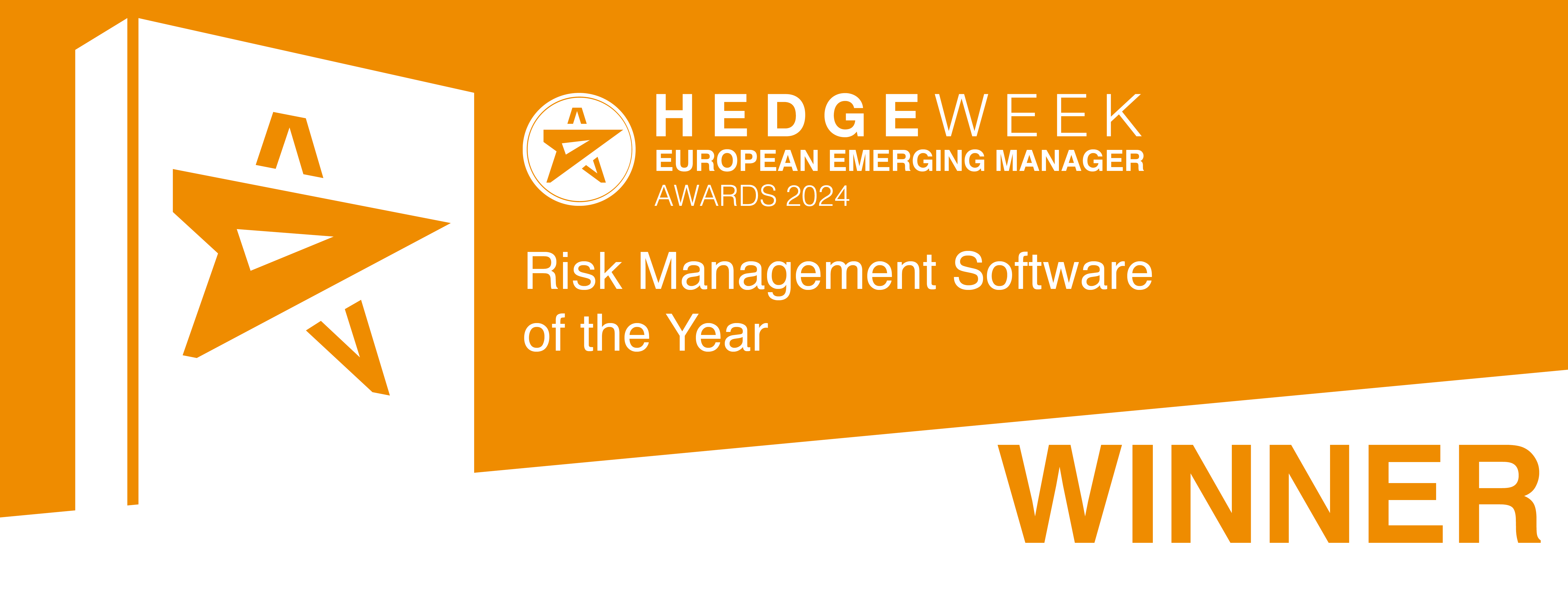
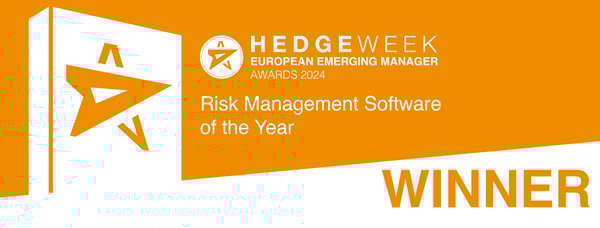
Hedgeweek names Landytech Risk Management Software of the Year 2024 for its innovative solution, empowering hedge funds to excel in risk analytics and reporting
Unlock your portfolio potential by mastering multi-asset factor models to identify and manage hidden risks. Optimise your investments with these insights.
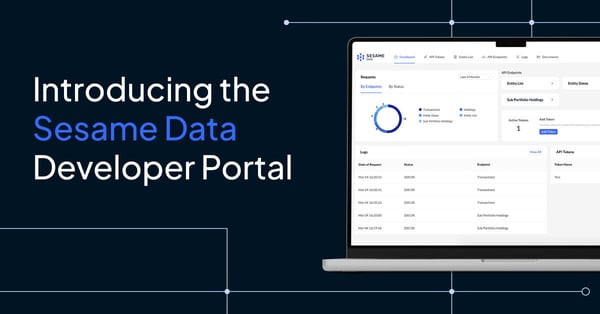
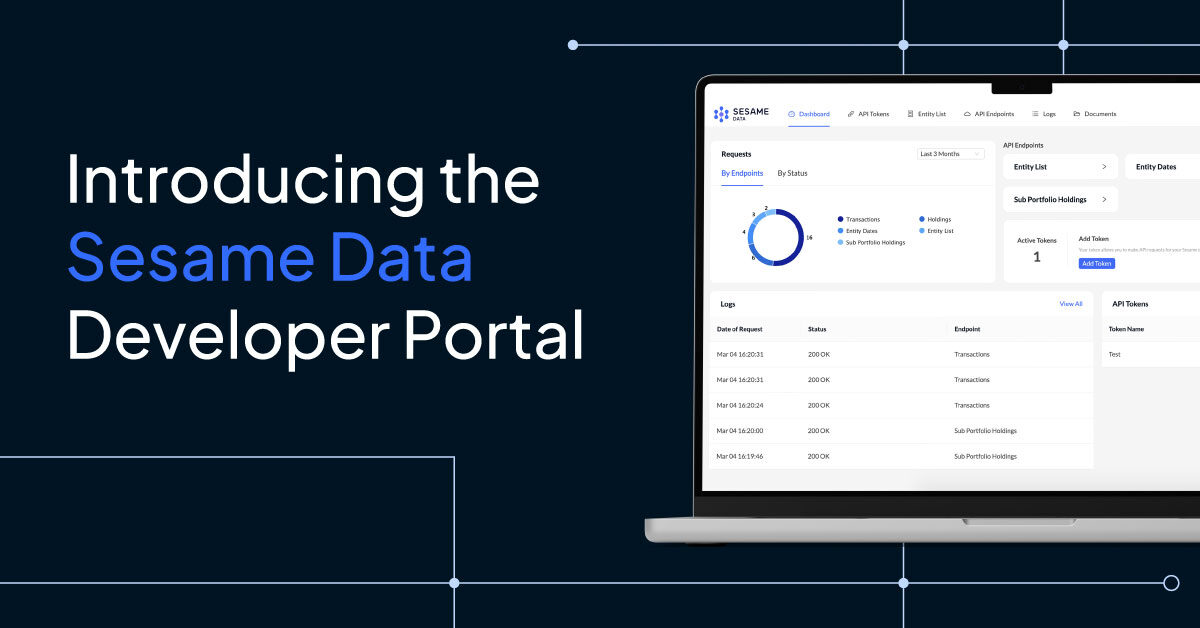
The Sesame Data Developer Portal empowers developers with API tools and documentation to streamline integration and create data-driven business processes quickly.
Risk management is a complex domain of expertise. Navigating today’s fast-paced, globalised investment world takes a proven infrastructure, along with specialist risk and technology skillsets to deliver the timely, high-quality results allocators expect.
Investment reporting scale-up Landytech raises $12M in Series B funding to support the acceleration of its go-to-market strategy and expansion initiatives
In this regulatory round-up, we break down the key regulatory updates and their practical implications for EU and UK-based asset managers in the coming months.
Asset managers must demonstrate that their fund disclosures and reporting approach meets parameters which are strictly linked to ESG reporting criteria.
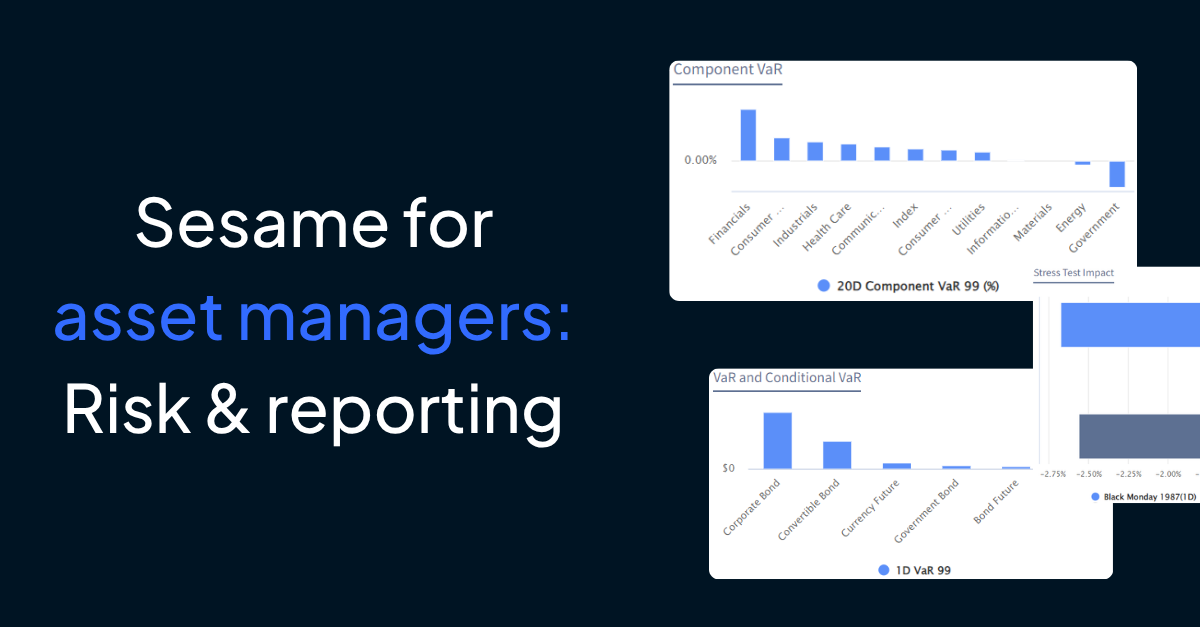
Asset managers competing for institutional mandates need risk and reporting infrastructure that matches allocator expectations, without the overhead of building it in-house. A look at how Sesame transforms that capability for growing managers.
Investors now expect on-demand, granular reporting, and legacy processes are straining under the pressure. So how can you create reports that clients love?
In a fully digitalised and automated process, reporting can become so much more than just stale, one-way broadcasting. It can redefine client experience.
The need to manage large volumes of data and perform complex calculations at speed have left many firms’ legacy systems and outdated technology struggling to keep up. It’s time to take to the cloud.
With risk management an increasingly central focus in investor and consultant due diligence examinations, asset managers’ ability to attract allocations is ever more closely tied to their risk capabilities.
This recognition underscores our commitment to empowering hedge funds with cutting-edge tools to navigate and leverage risk analytics and reporting with confidence and precision.
For over a decade, the Hedgeweek European Emerging Manager Awards program has recognised excellence in fund performance and service provision within the emerging investment management industry. We are incredibly grateful to everyone who voted for us in the risk management software category; thank you for your support.
Winners were announced during the awards ceremony in London on 14th November 2024.
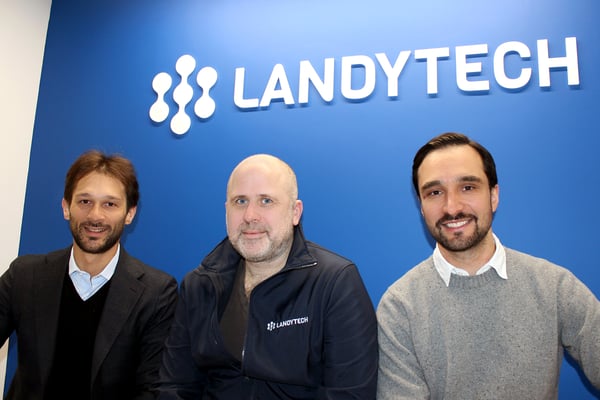
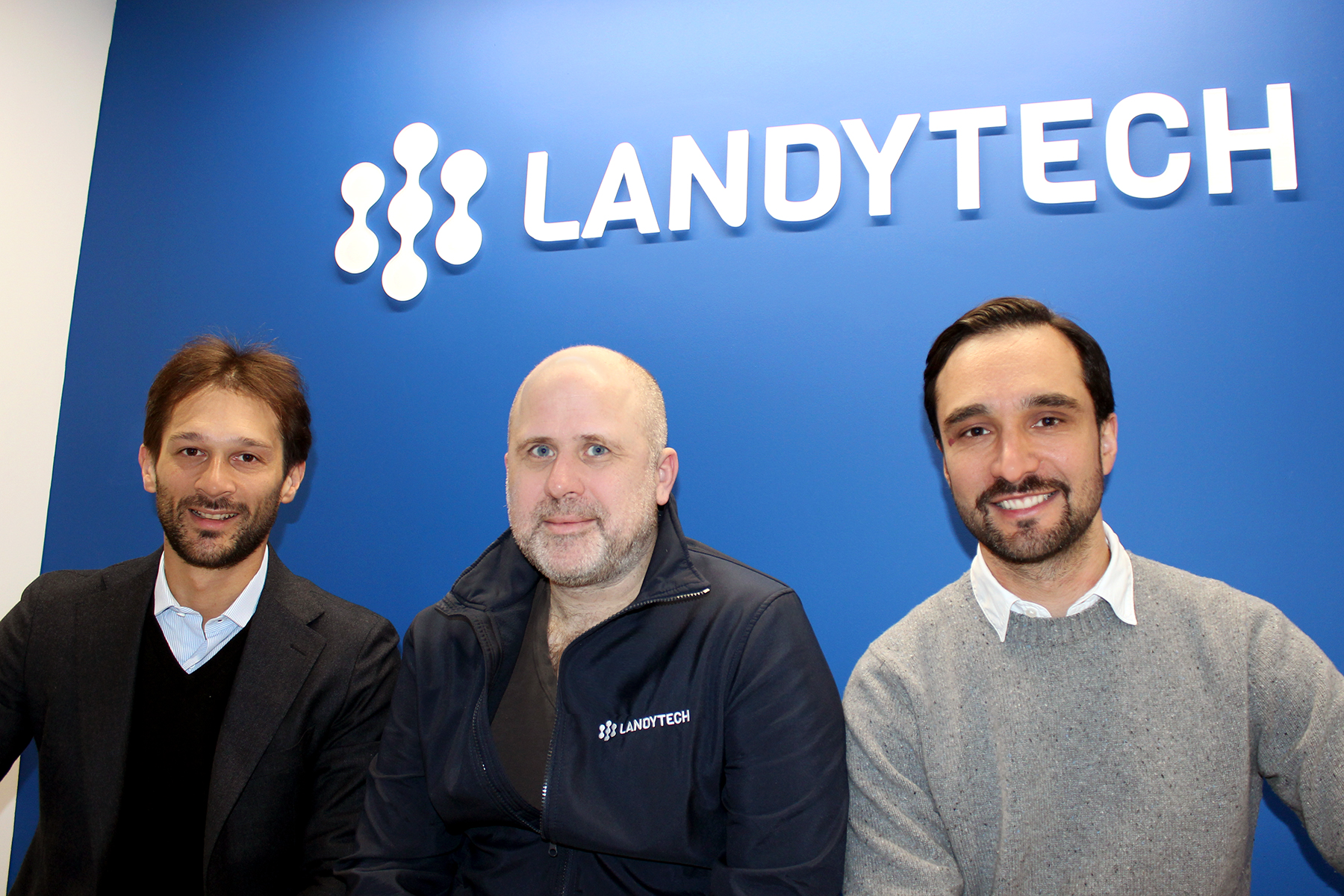
(L-R) Landytech's Max Wilson, Cathal Dennehy and Amy Allpress accept the award for "Risk Management Software of the Year" 2024
Since we launched Sesame in 2019, Landytech has been on a mission to revolutionise the tools used for investment analysis and reporting, tackling the unique technical challenges that investment professionals face.
Over the past 4 years, our team has worked tirelessly to build a platform that provides you with a tool for automated data consolidation, enhanced portfolio analytics and streamlined report creation.
We envisioned Sesame 3.0 long before launching 2.0, and now, the next generation investment management platform is here to solve the most pressing challenges faced by today’s asset owners, managers and advisers.
To date, investment analysis and reporting have driven our platform’s success. But we realised that our users needed more: a central platform for all their day-to-day investment management operations. A source of truth not just for investment data, but all related information so that everyone in the team can access critical context and records in one single place.
The launch of Sesame 3.0 marks a fundamental shift, making Sesame your command centre for investment management. It’s better connected than ever, with a revolutionary new reporting tool and a completely new way for you to drive collaboration across your team. Discover the capabilities that have made us so excited to announce Sesame 3.0:
Risk management is a complex domain of expertise. Navigating today’s fast-paced and volatile markets with confidence and clarity takes a proven infrastructure, along with specialised risk and technology skillsets to deliver the timely insights needed to make investment decisions quickly and provide the high-quality reports allocators expect.
Right from inception, asset managers need a robust, institutional-grade risk management capability to attract investor allocations and meet clients’ ongoing demands. Without one, you likely won’t even make it through the due diligence process. But what does an in-house risk management and reporting function need to have in practice?
In a rapidly evolving landscape, asset managers are increasingly relyingon risk management providers. Meeting regulatory expectations and the needs of increasingly demanding investors means thatfinding the ideal partneris more important than ever.
Asset managers continue to grapple with a number of challenges spanning cost squeezes, fee pressures and patchy returns. They are under pressure to find significant operational efficiencies, and fast. The question of how far managers should go in outsourcing and automating various functions to find these efficiencies has become a hot topic of discussion.
Despite recent market turbulence, there has been no let-up in the deluge of new regulation on the way. It means asset managers are having to invest even more time, effort and money into meeting new requirements, posing a significant challenge for small and emerging managers, where funds, resources and staff are often in short supply.
There has been an explosion in the popularity of environmental, social, and governance funds in recent years. In light of this growth, fund managers have been increasingly keen to step up their commitment to ESG and its measurement.
The rewards for those that get it right are high. An authentic ESG strategy that is evident through a firm’s products, their investment process and data-driven reporting is easy for existing investors to understand and attractive to prospects that value ESG highly.
Asset managers must demonstrate that their fund disclosures and reporting approach meets parameters which are strictly linked to ESG reporting criteria. But reporting is not an easy landscape to navigate when it comes to ESG.
The EU has started to implement the Sustainable Finance Disclosure Regulation (SFDR), which sets out rules for classifying and reporting on sustainability and ESG factors in investments. But whilst regulators and industry bodies across the globe play catch up, there has been a distinct lack of guidance for asset managers compared to other more established investment reports.
Despite this ambiguity, there are three principles ESG reports should adhere to: authenticity, substance and defendable data. Asset managers need to be transparent on the methodological approach followed in their investment strategy, implementation of governance and the reporting in place.
Today, most asset managers have several options to demonstrate the transparency and accountability of their ESG funds. But how these are implemented for reporting depends on the ESG strategy in place, and the jurisdiction in which the asset manager is operating.
For a growing asset manager, the gap between the infrastructure you have and the infrastructure allocators expect is one of the most commercially consequential challenges you face. Institutional investors and consultants apply exacting due diligence standards before committing capital. They want to see robust risk management, accurate and timely reporting, and evidence that the firm has the operational discipline to support a significant mandate. Meeting that standard in-house, at the scale required and with the quality expected, carries a cost that most emerging and mid-sized managers cannot justify at their current stage.
Interest in ESG has increased exponentially in recent years and there has been no sign of slowing in 2022, so far. But it is not just inflows to ESG funds that has been increasing. As policymakers turn their attention to environmental, social, and governance concerns, there has been increased pressure for asset managers to provide more data and consistent reporting around ESG investments.
Although a tightening of regulation is presenting asset managers with new data and reporting challenges that must be addressed, it is also creating new market opportunities. In particular, the opportunity to develop new fund vehicles that legitimately address environmental, social and governance concerns, and meet the demands of today’s ESG-conscious investors.
So, what are the trends shaping the ESG agenda for asset managers?
When it comes to reporting, many firms still rely on outdated technology and legacy systems. Combining data from multiple sources and offline spreadsheets is an inefficient process that takes far too long, is highly prone to manual errors, and limits reporting flexibility.
It is no revelation that clients are increasingly savvy investors, and at a time of increasing market volatility and industry competition, expectations are soaring. Clients want on-demand, granular reporting, and legacy processes are straining under the pressure.
The EU has started to implement the Sustainable Finance Disclosure Regulation (SFDR), which sets out rules for classifying and reporting on sustainability and ESG factors in investments.
Many members of the investment management community, hesitant to act as early adopters, have resisted pressure to fully digitalise and automate reporting – so far. Firms often want to see that new technology has been implemented successfully at competitors before making the leap. However, across the investment management spectrum, the need for a radically different approach to investment reporting has never been greater.
Increased competition and industry consolidation makes delivering – and proving – higher returns more important than ever, requiring advanced analytics and reporting. It’s also putting the squeeze on fees, pressuring firms to reduce the total cost of ownership for their IT tech stack and legacy systems. More efficient solutions need to be found if operational alpha is to be achieved.
In this shifting landscape, implementing a data-driven, agile approach to investment reporting can help asset and wealth managers get back ahead of the game.
In recent years, the complexity of performance measurement and risk calculations and the volume of data required to fuel them has increased exponentially, presenting asset managers with a significant challenge.
The investment management industry is one of the most data-intensive in the world. Yet with manual processes still commonplace, accessing and leveraging this vast data for efficient and robust front, middle, and back-office workflows is still not the norm. But things are changing. As the industry accelerates its digital transformation, the use of APIs to streamline data flows is becoming table stakes.












.png)



 (L-R) Landytech's Max Wilson, Cathal Dennehy and Amy Allpress accept